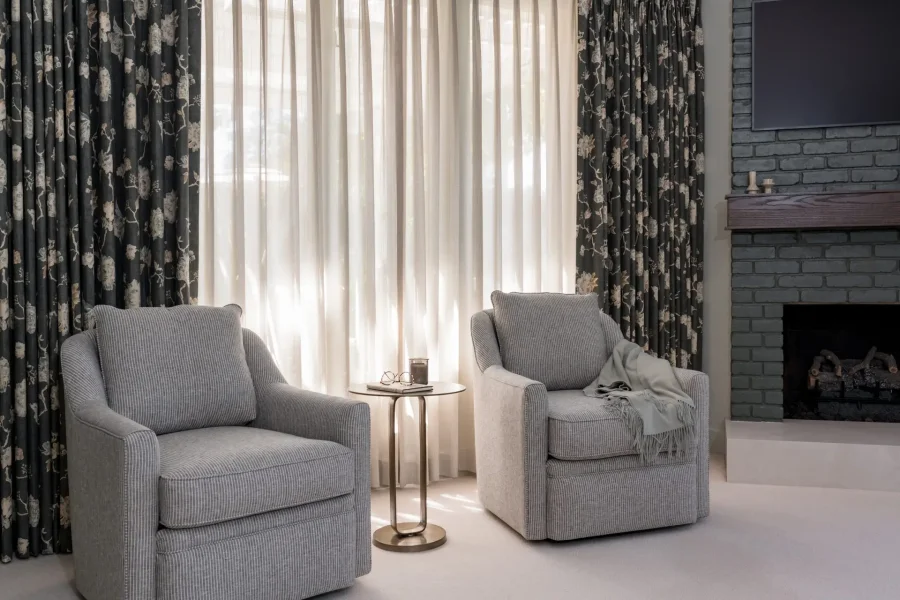
There’s a moment that happens almost instantly when we walk into a home for the first time.
It’s not about evaluating the furniture or scanning the room for what’s trendy. In fact, those details rarely register first. Instead, our attention goes somewhere else entirely—the overall feeling of the space.
Good design reveals itself quickly. Long before we notice specific finishes or décor, we’re picking up on things like light, proportion, and how naturally the rooms connect to one another. These elements shape how a home feels to live in, even if they’re not immediately obvious.
Over time, we’ve realized that designers tend to notice the same things first.
The Quality of the Light
Lighting is often the first thing we register when entering a room.
Does the space rely entirely on overhead lighting, or are there multiple sources creating warmth and depth? The most comfortable homes rarely depend on a single ceiling fixture.
Instead, light comes from several places—table lamps, sconces, natural daylight, and ambient fixtures working together.
When lighting is layered thoughtfully, a room instantly feels more welcoming. The atmosphere shifts from functional to inviting, which is often the difference between a house that looks good and one that truly feels good to spend time in.

How the Home Flows
The next thing we tend to notice is how easily the home moves from one space to another.
Are there natural pathways through the rooms? Do seating areas encourage conversation? Does the layout allow people to gather without feeling crowded?
Homes that feel effortless usually have a sense of intuitive flow. You don’t have to think about where to go or how to move through the space—it simply works.
Proportion and Scale
Even before focusing on individual pieces of furniture, designers often register whether a room feels balanced.
A sofa that’s too small for the space, artwork hung slightly too high, or lighting that’s undersized can subtly throw off the entire room. When proportions are thoughtfully considered, everything begins to feel cohesive.
Scale is one of the less obvious elements of design, but it has an enormous impact on whether a space feels polished and comfortable.
Where the Eye Naturally Lands
Every room benefits from a place where the eye can settle.
Sometimes that focal point is architectural—a fireplace, a window with a view, or a beautifully detailed ceiling. Other times it might be a piece of art, a striking light fixture, or a thoughtfully styled vignette.
Without a clear focal point, even a beautifully furnished room can feel slightly unsettled. When the eye has a natural place to land, the entire space feels more grounded.

The Overall Feeling of the Home
Perhaps the most important thing we notice isn’t any single detail.
It’s the overall atmosphere.
Some homes immediately feel calm, layered, and welcoming. Others feel visually busy or slightly chaotic, even if every item in the room is individually beautiful.
The difference often comes down to restraint—editing carefully and allowing space for each element to breathe. When a home strikes that balance, it becomes a place where people naturally relax and settle in.
Why These Details Matter
What’s interesting about all of these observations is that they rarely come down to buying more things.
Instead, they come from thoughtful decisions about lighting, scale, placement, and flow. These are the elements that shape how a home supports daily life, often in ways that people can’t immediately articulate.
When those decisions are handled well, the result is a home that feels effortless—comfortable, cohesive, and easy to live in.
And that’s usually what we notice first.