Some homes feel inviting the moment you walk through the door. Others — despite beautiful finishes and expensive furnishings — can feel cold or unfinished.
Often, the difference has very little to do with square footage or budget.
The homes that feel the most welcoming are usually layered thoughtfully. They balance architecture with softness, contrast with comfort, and beauty with livability. Warmth in a home is less about a specific style and more about creating an atmosphere that feels relaxed, collected, and deeply considered.
Here are five design elements that make the biggest difference.
1. Layered Lighting
If we’ve said it once, we’ve said it a hundred times — lighting can completely change the way a home feels.
It is one of the most overlooked elements in a home, yet it has one of the greatest impacts on atmosphere and overall livability.
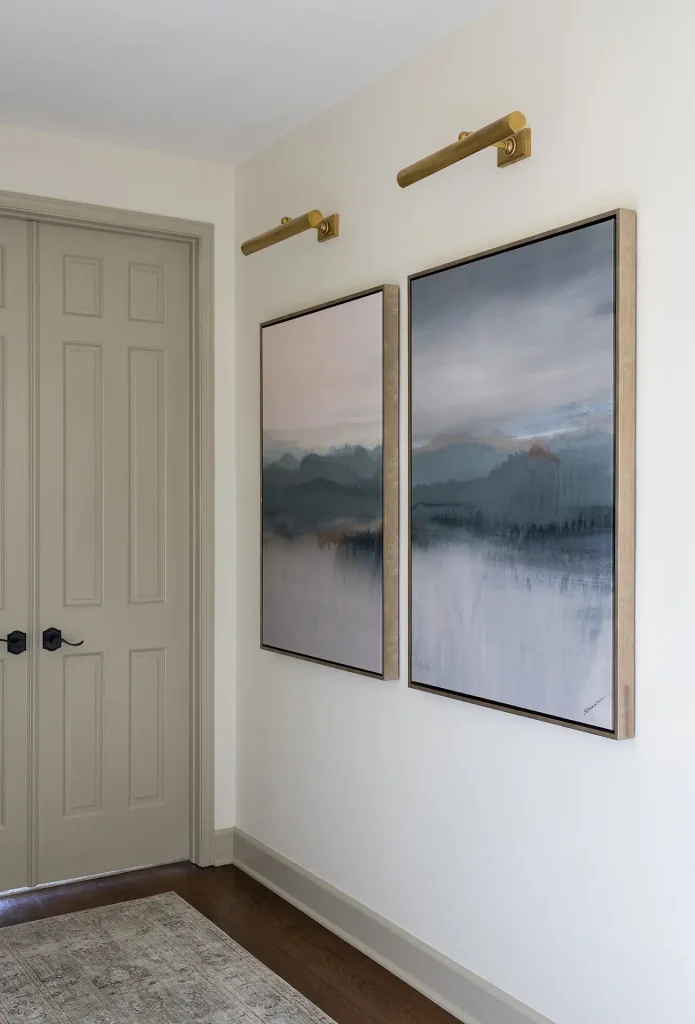
Relying solely on recessed ceiling lights can make even a beautifully designed room feel flat and overly bright. The most inviting interiors use layered lighting instead — combining sconces, table lamps, floor lamps, picture lights, and decorative fixtures to create depth and ambiance throughout the day and evening.
Warm lighting also changes the mood of a room dramatically. A softer glow creates intimacy and comfort in a way overhead lighting alone never can.
One of the simplest ways to make a home feel more elevated is to think beyond functionality and design lighting around atmosphere.
2. Natural Materials
There is a reason natural materials continue to define timeless interiors.
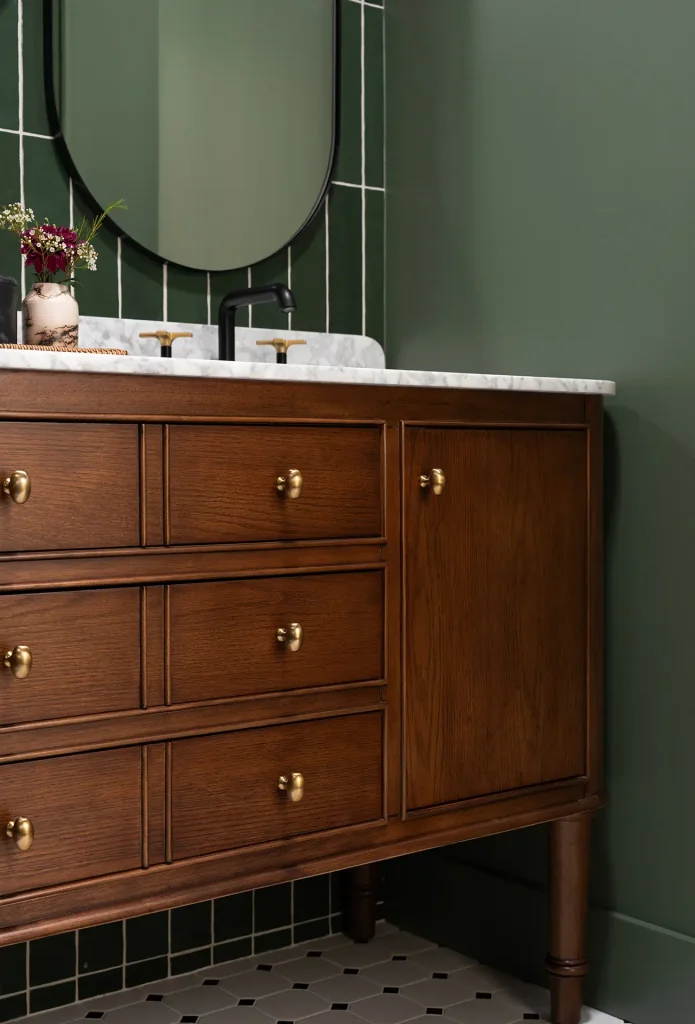
Linen, oak, plaster, wool, stone, aged brass, and handmade ceramics all bring texture and dimension into a space. These materials feel lived-in and layered in a way synthetic finishes often do not.
Homes feel warmer when they include variation — subtle imperfections, organic textures, and materials that age beautifully over time.
This does not mean every room needs to feel rustic or traditional. Even the most modern interiors benefit from incorporating natural elements that soften sharper architectural lines and create balance throughout the home.
3. Drapery and Textiles
Textiles are often what make a room feel complete.
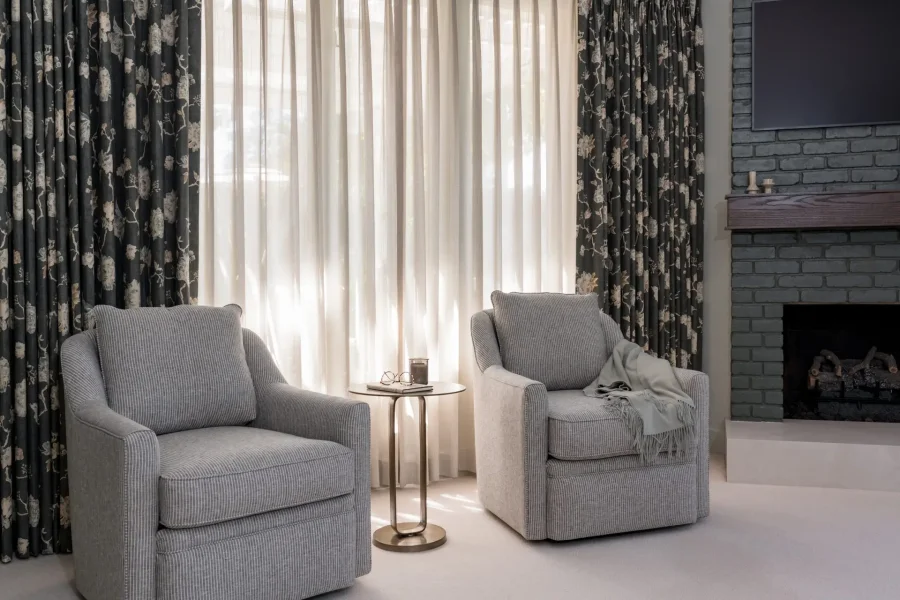
Drapery, rugs, upholstery, pillows, and layered fabrics introduce softness, movement, and warmth while helping spaces feel more comfortable acoustically and visually. Without these layers, even well-designed rooms can feel stark or unfinished.
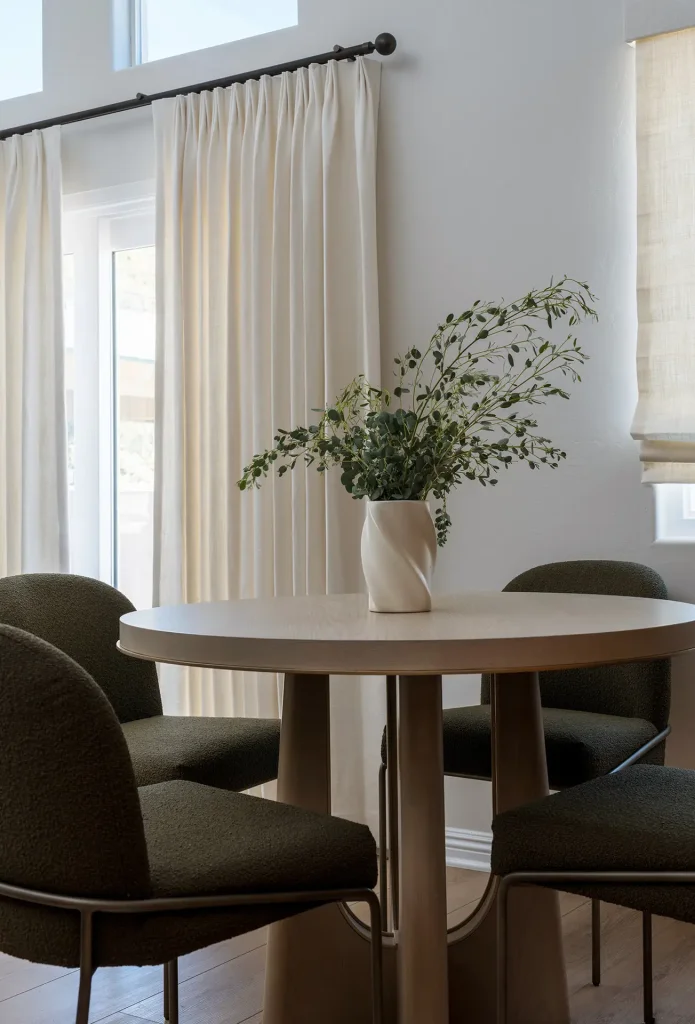
One of the most transformative additions is sheer drapery. Sheers soften natural light beautifully while adding texture and movement without overwhelming the architecture of the space.
Layering drapery with woven shades, textured upholstery, and natural fiber rugs creates the kind of depth that makes a home feel elevated rather than overly styled.
The best interiors rarely rely on a single material or finish. They feel collected through layers.
4. Contrast and Depth
The most inviting homes create balance through contrast.
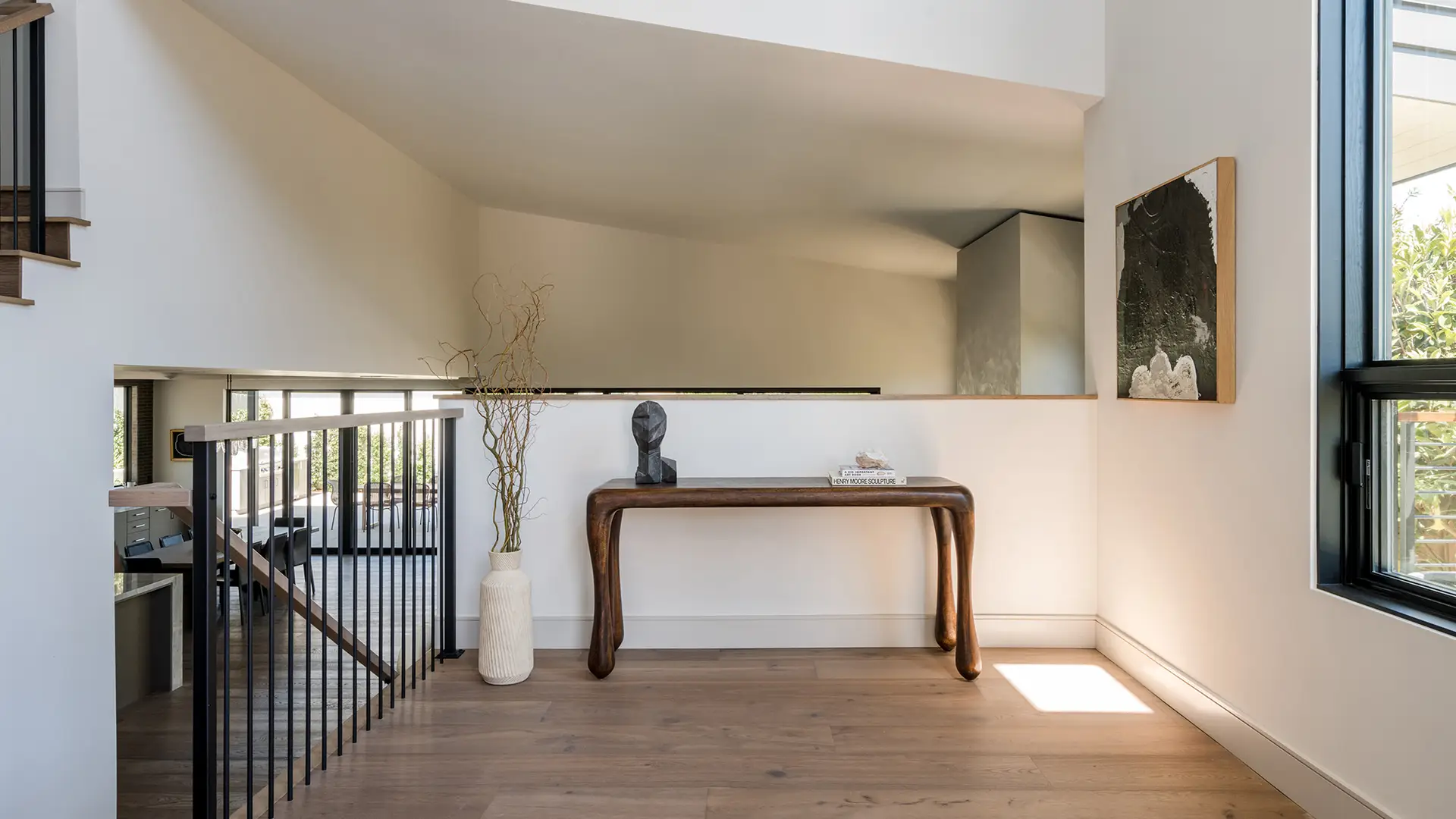
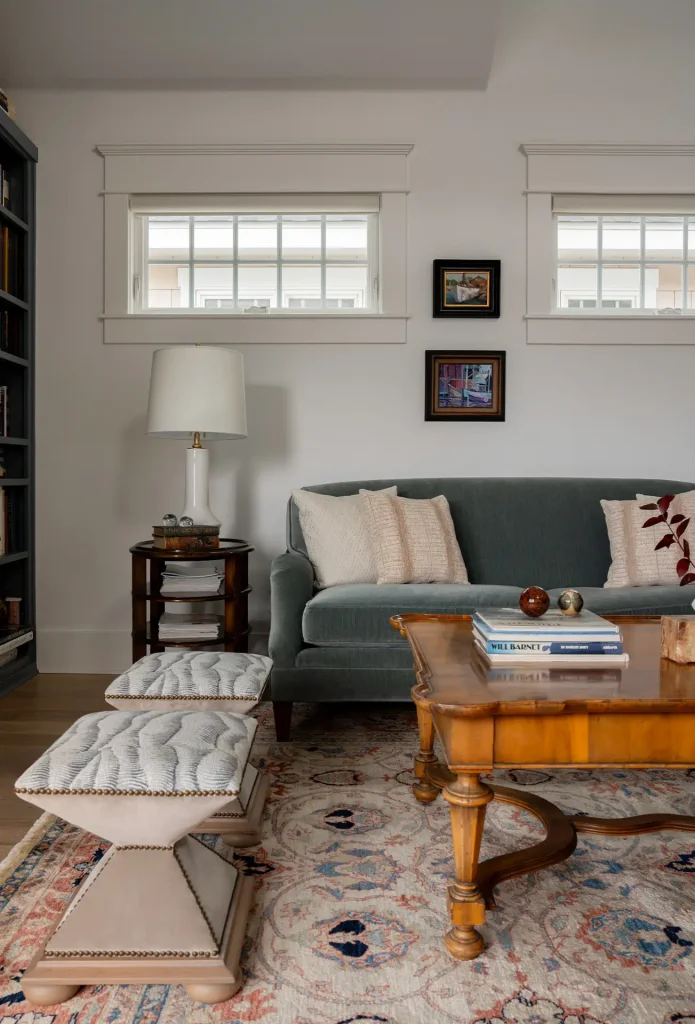
That contrast might come from mixing light and dark tones, pairing vintage pieces with contemporary furnishings, or layering matte finishes alongside polished surfaces. It may also come from balancing structured architectural details with softer organic forms.
Without contrast, rooms can feel visually flat. But when thoughtfully layered, contrast creates depth and interest while making a space feel more dynamic and personal.
Some of the most beautiful interiors are not perfectly matched. They feel nuanced, relaxed, and intentionally layered over time.
5. Personal Layers That Tell a Story
The homes that feel the warmest are rarely the ones that look untouched.
Books stacked on a console, collected objects from travel, vintage pieces with patina, meaningful artwork, and personal styling all contribute to a home that feels authentic and lived in.
These elements create personality and individuality — the difference between a space that feels staged and one that feels deeply personal.
The goal is not to fill every surface. In fact, restraint often creates a stronger impact. But thoughtful personal layers help a home feel connected to the people who live there.
At the end of the day, warmth is not created through one single design choice. It comes from the combination of texture, lighting, materiality, and intentional layering working together to shape how a home feels.
The most memorable interiors are not only beautiful to look at. They create a sense of comfort, ease, and connection the moment you enter the room.